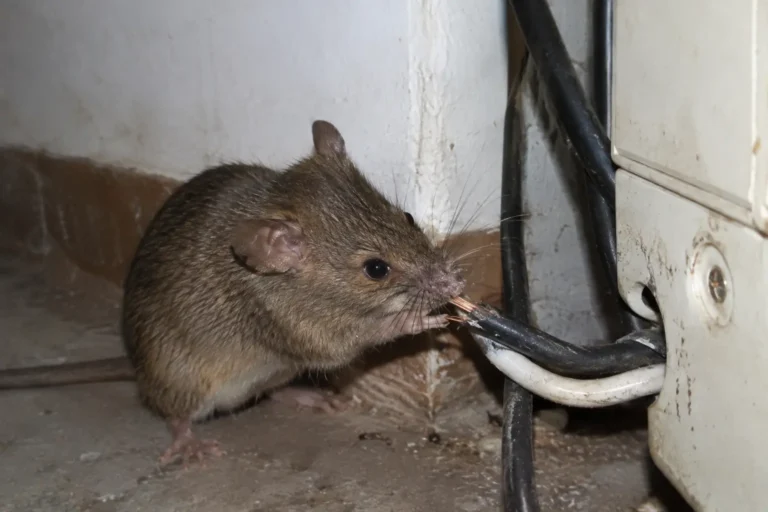

Nobody researches pest control companies for fun. Most people go looking the day they spot droppings under the sink or hear scratching in the ceiling, which is exactly the wrong moment to be making a rushed decision. It shows in the complaints data too: Western Australia’s Consumer Protection division has fielded 45 complaints about pest operators since 2023, and a good number involve termite barriers that were promised, invoiced, and never actually installed (commerce.wa.gov.au).
The reassuring part is that dodgy operators tend to show their hand early, if you know what to watch for. This matters whether you’re calling someone in for the first time or you’ve already tried a home remedy that didn’t hold. Here are seven signs worth pausing over before you sign anything.
1. They can’t, or won’t, show you a current licence
Using pesticides for a fee requires a licence or business registration in every Australian state and territory, though the exact rules differ. NSW Fair Trading puts it bluntly: don’t deal with anyone offering pest control services who isn’t a properly licensed technician, and ask to see the licence rather than taking someone’s word for it (nsw.gov.au). Western Australia goes a step further, requiring pest management businesses to register with the Department of Health, with homeowners encouraged to ask for that registration number up front (healthywa.health.wa.gov.au). A legitimate technician won’t blink at the question.
2. They quote a price without ever inspecting the property
If a company can give you a firm price over the phone for “general pest treatment” without anyone setting foot on the property, be a little suspicious. Correctly identifying the pest and how far an infestation has spread almost always calls for an actual look around, not a guess based on a two-minute phone description. Skip that step and you’re paying for a treatment aimed at nothing in particular.
Ready to Share Your Story?
Join Idiora Times and reach a wider audience with your valuable content.
3. There’s no written contract, scope or terms
Getting a few quotes and asking for terms in writing before you commit is standard advice from WA’s Consumer Protection Commissioner (commerce.wa.gov.au). It matters even more if you’re signing at your own front door rather than at the company’s premises. In that case, the Australian Consumer Law treats it as an unsolicited consumer agreement, which means the seller has to hand you a written, easy-to-read contract and give you a 10-business-day cooling-off period (accc.gov.au). If a company won’t put the scope, price and guarantee terms on paper, you’ve got nothing to hold them to once they’ve left.
4. They lean on high-pressure or urgency sales tactics
An ACCC review of unsolicited selling practices found high-pressure and misleading tactics are still common across door-to-door and telemarketing sales, pest control included (pv-magazine-australia.com). The law is clear that a salesperson can’t use physical force, coercion or undue harassment, and has to leave the moment you ask them to (accc.gov.au). If someone won’t take no for an answer, or insists the deal only stands if you sign right now, that’s reason enough to show them the door.
5. They won’t explain what products they’re using
Every pesticide sold in Australia has to be registered with the Australian Pesticides and Veterinary Medicines Authority (APVMA), and the label spells out exactly how it’s meant to be used, including precautions around people, pets and the environment (apvma.gov.au). So if a technician can’t or won’t tell you which product they’re spraying, or waves off a question about your dog or your asthma, they’re withholding information the label itself is designed to give you.
6. They offer no guarantee, or are vague about what it covers
Most reputable operators stand behind their work in some form and can tell you, without hedging, what brings them back for a free follow-up versus what counts as a new job. If the answer to “what’s your guarantee?” is a shrug, or the terms only exist verbally, treat that as a genuine warning sign rather than a small omission.
7. For termite work, there’s no compliant, documented report
Termite management in Australia isn’t left to individual judgement; it’s governed by the AS 3660 series of Australian Standards, covering inspection, treatment, documentation and ongoing maintenance (standards.org.au). A company that treats a termite problem and hands you nothing in writing, or can’t explain how their approach lines up with AS 3660, has left you with no record of what was actually done. That gap matters enormously if the termites come back, or if you’re trying to sell the house later.
Protecting yourself before you sign anything
You don’t need any specialist knowledge to catch these. Under the Australian Consumer Law, pest control services have to be delivered with due care and skill and be fit for purpose, and an operator can be on the hook for damage if a treatment falls short of that (commerce.wa.gov.au). Getting a couple of quotes, insisting on paperwork, and checking a licence before anyone touches your property will filter out most of the operators worth avoiding. And if you’re still deciding whether the problem is small enough to handle yourself, it’s worth reading up on when DIY treatment is enough and when it genuinely isn’t.
Frequently Asked Questions
How do I check if a pest control company is licensed in my state? Ask them for their licence or registration number directly, then verify it where possible through your state’s fair trading or health department, such as NSW Fair Trading or WA’s Department of Health.
Is it normal to get a quote without an inspection? For a very small, single-pest job it happens sometimes, but a broader infestation or any termite treatment should generally involve someone actually inspecting the property first.
What should a pest control contract include? At a minimum: the scope of work, the price, the products or treatment method being used, and the guarantee terms, all in writing before work starts.
Can I cancel after signing if I felt pressured into it? If you signed away from the company’s premises, such as at your door, the Australian Consumer Law generally gives you a 10-business-day cooling-off period to cancel.
Why does the AS 3660 standard matter for termite treatments? It’s the accepted benchmark for how termite inspections, barriers and documentation should be handled in Australia, and it can matter later for insurance claims, resale, or disputes over whether the work was actually done properly.